Skip to main
University-wide Navigation

The day the Herculaneum scrolls began speaking again

The Vesuvius Challenge, co-founded by Brent Seales, professor of computer science, has achieved a historic breakthrough in the recovery of the Herculaneum scrolls — revealing new texts, titles and authors unknown to history and ushering in a new era for the study of the ancient world. At the Biblioteca Nazionale di Napoli Vittorio Emanuele III — with Mount Vesuvius rising in the distance — lead researchers, collaborators and distinguished guests gathered to mark the milestone decades in the making.

UK leads national effort to expand AI access for undergrads

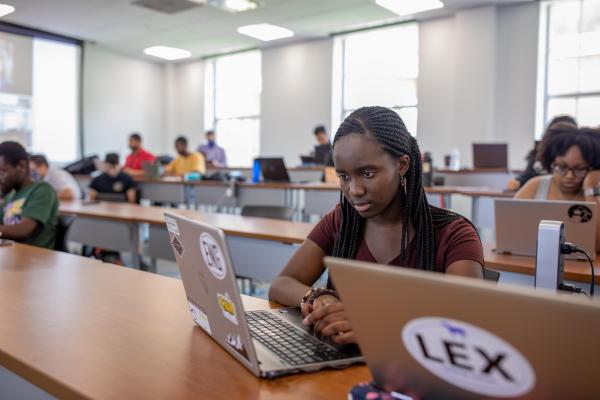
As artificial intelligence (AI) reshapes nearly every sector — from health and agriculture to journalism and the arts — demand for graduates who understand its foundations and implications is rapidly growing. Yet, traditional AI coursework often requires advanced programming skills or a computer science background.

UK researcher develops safety system to help self-driving vehicles and drones work together

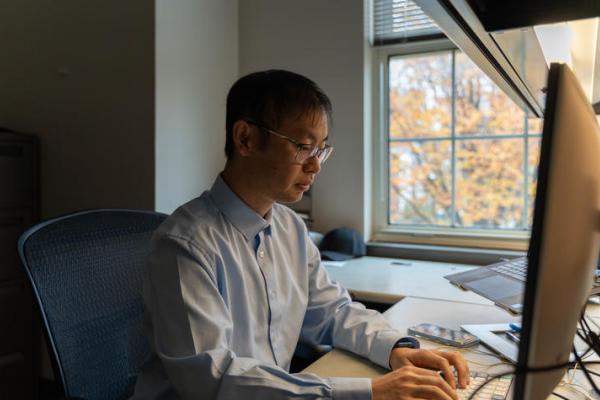
As self-driving vehicles and drones become more common, a University of Kentucky researcher is working to ensure these technologies can communicate and coordinate reliably in real time. Yang Xiao, Ph.D., assistant professor in the Department of Computer Science in the UK Stanley and Karen Pigman College of Engineering, received the prestigious National Science Foundation (NSF) Faculty Early Career Development (CAREER) Award with $534,264 over five years for his work.

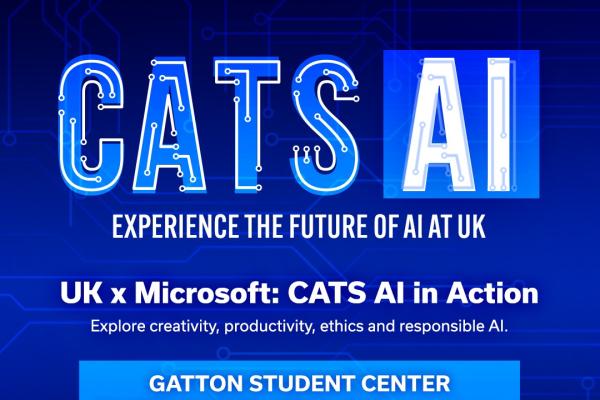
UK, Microsoft to host campuswide ‘Cats AI in Action’ showcase

Computer Science faculty will participate in the 'Cats AI in Action', Thursday, Feb. 26, from 10 a.m.-2 p.m. in the Gatton Student Center.

NSF CAREER award supports faster, smarter use of massive scientific data

Today’s most powerful supercomputers can answer big scientific questions. However, managing large amounts of data presents a major obstacle. That challenge is the focus of the work by Xin Liang, Ph.D., assistant professor in the Department of Computer Science. Liang recently received the prestigious National Science Foundation (NSF) Faculty Early Career Development (CAREER) Award with $500,000 over five years for his research.

‘AI is the future’: UK launches state’s 1st Bachelor of Science in AI

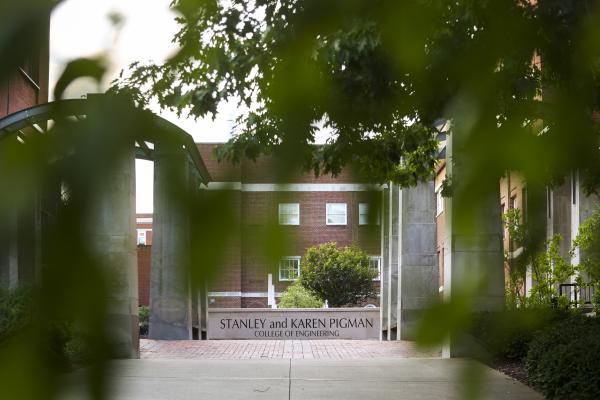
The Stanley and Karen Pigman College of Engineering at the University of Kentucky has launched the Commonwealth’s first Bachelor of Science in AI. The undergraduate degree program, housed in the Department of Computer Science, will welcome its first class in Fall 2026.

UK faculty awarded by Schmidt Sciences to bring AI to humanities research

Schmidt Sciences has awarded $11 million for up to 23 teams of researchers around the world to develop and apply artificial intelligence to archaeology, history, literature and other humanities disciplines, seeking to unlock new understandings of human history and culture, the organization announced today.

2026 Lighthouse Beacon Foundation Scholars announced

Thanks to the generous support of Stanley and Karen Pigman and Kentucky’s Research Challenge Trust Fund (RCTF), engineering researchers are receiving additional annual funding to enhance the research priorities and programs of the Pigman College of Engineering. Established in 2024, the Lighthouse Beacon Foundation Endowment supports faculty, research, graduate students, facilities and research infrastructure in the Pigman College of Engineering. This year, the endowment made $235,000 in funds available for distribution. 

UK Pigman Engineering researcher awarded NSF grant to harness AI aimed at detecting calf illness

Simone Silvestri, Ph.D., professor in the Department of Computer Science in the Stanley and Karen Pigman College of Engineering, is part of a research team that has been awarded a grant from the U.S. National Science Foundation (NSF) to answer that very question.

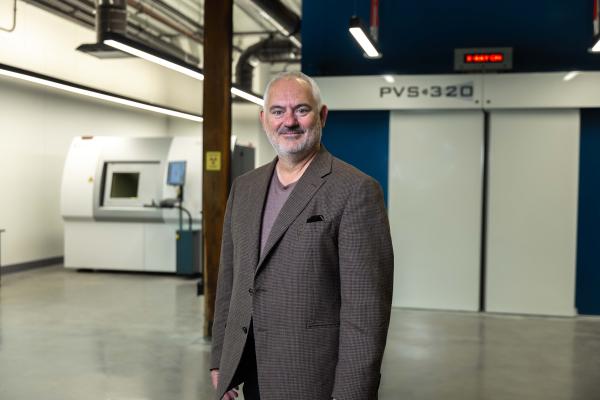
Beyond the breakthrough: How Brent Seales is pushing the boundaries of discovery through new heritage science lab

Seales has gathered a team of experts from the Pigman College of Engineering and the College of Arts and Sciences to create EduceLab — UK’s vision for next-generation heritage science.